The False Front
A Short History of Facades and the Return to Authenticity

Walk through almost any American suburb and you will see homes wearing thin layers of brick, stone, or siding that suggest craftsmanship without ever requiring it. These materials are not structural, not functional, and often not even honest. They are masks. Costumes. Carefully arranged illusions meant to signal quality rather than deliver it.
But facades weren’t always this way. Their story is much older, richer, and far more human than the thin veneers we see today.
Where Facades Began: Expression, Craft, and the European Tradition
For most of architectural history, a building’s exterior was inseparable from its structure. In ancient Rome, carved stone was both ornament and support. In Greece, the columns that defined their temples held the weight of massive roofs. Early timber framing across Europe showcased its joinery openly. No part of the building pretended to be something it wasn’t.
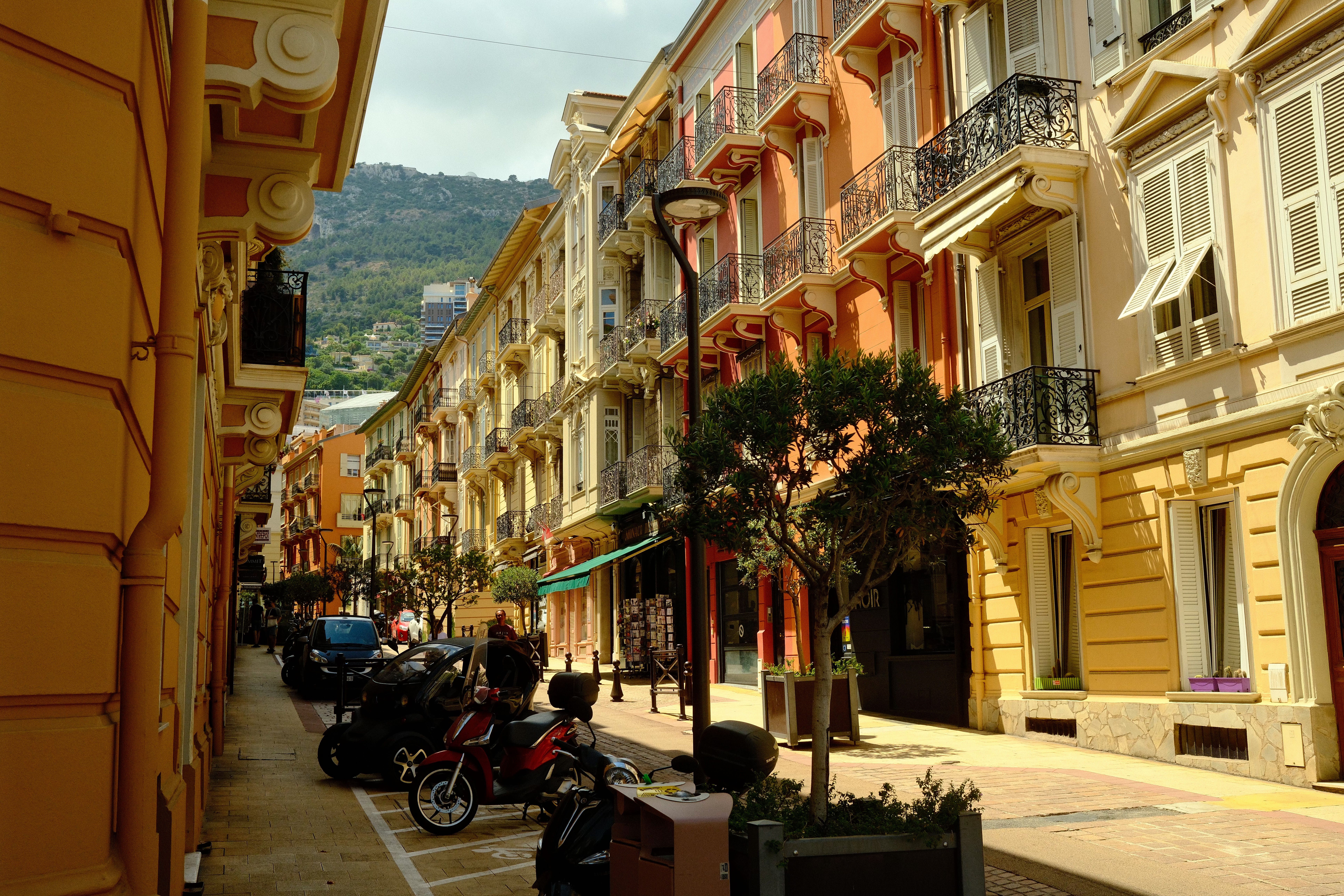
The idea of the facade as a surface for artistry began to flourish during the medieval and Renaissance periods. As cities grew, guild-trained craftsmen devoted their lives to shaping the faces of buildings. When you walk through places like Annecy, Provence, Menton, or Nice you see this legacy everywhere.
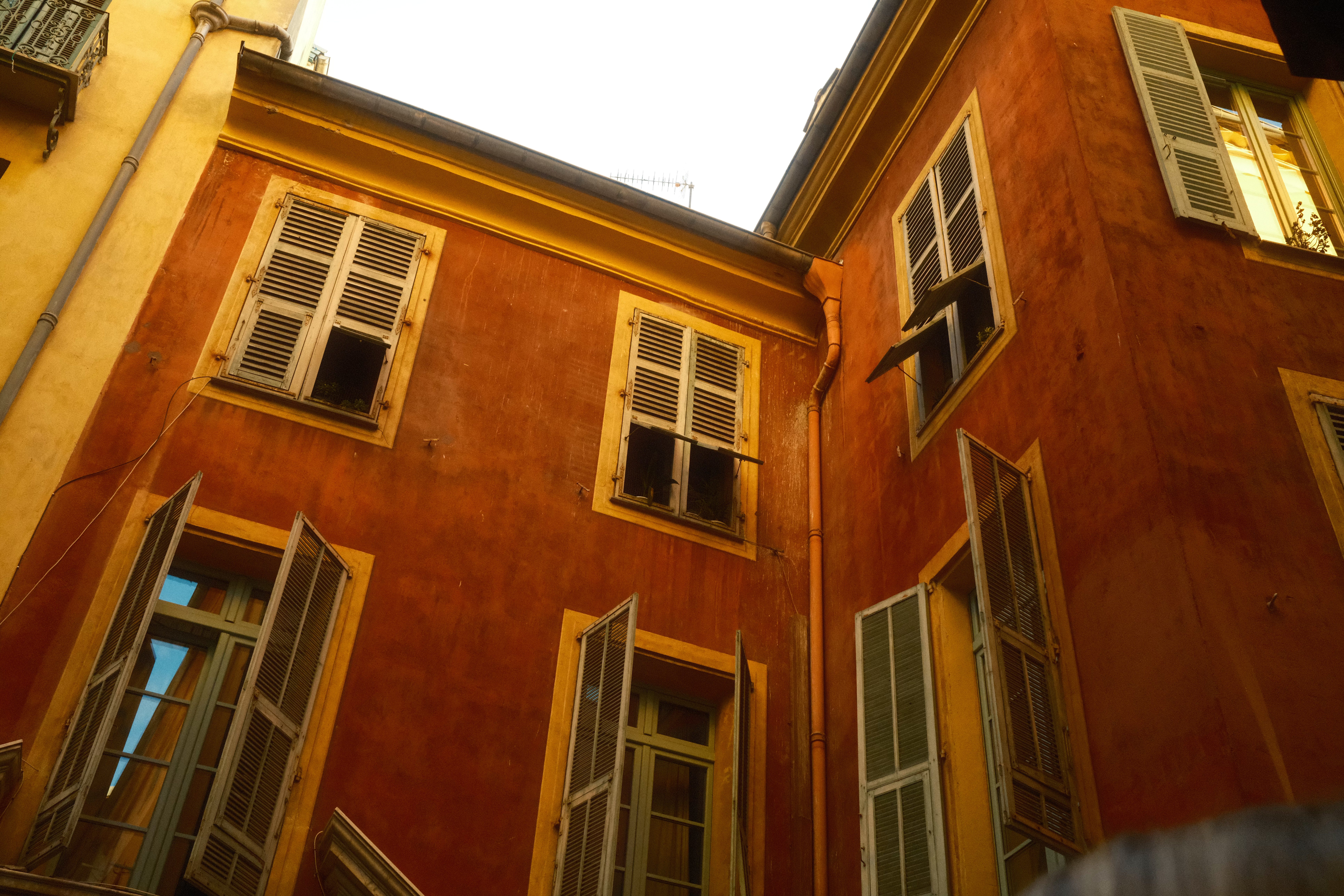
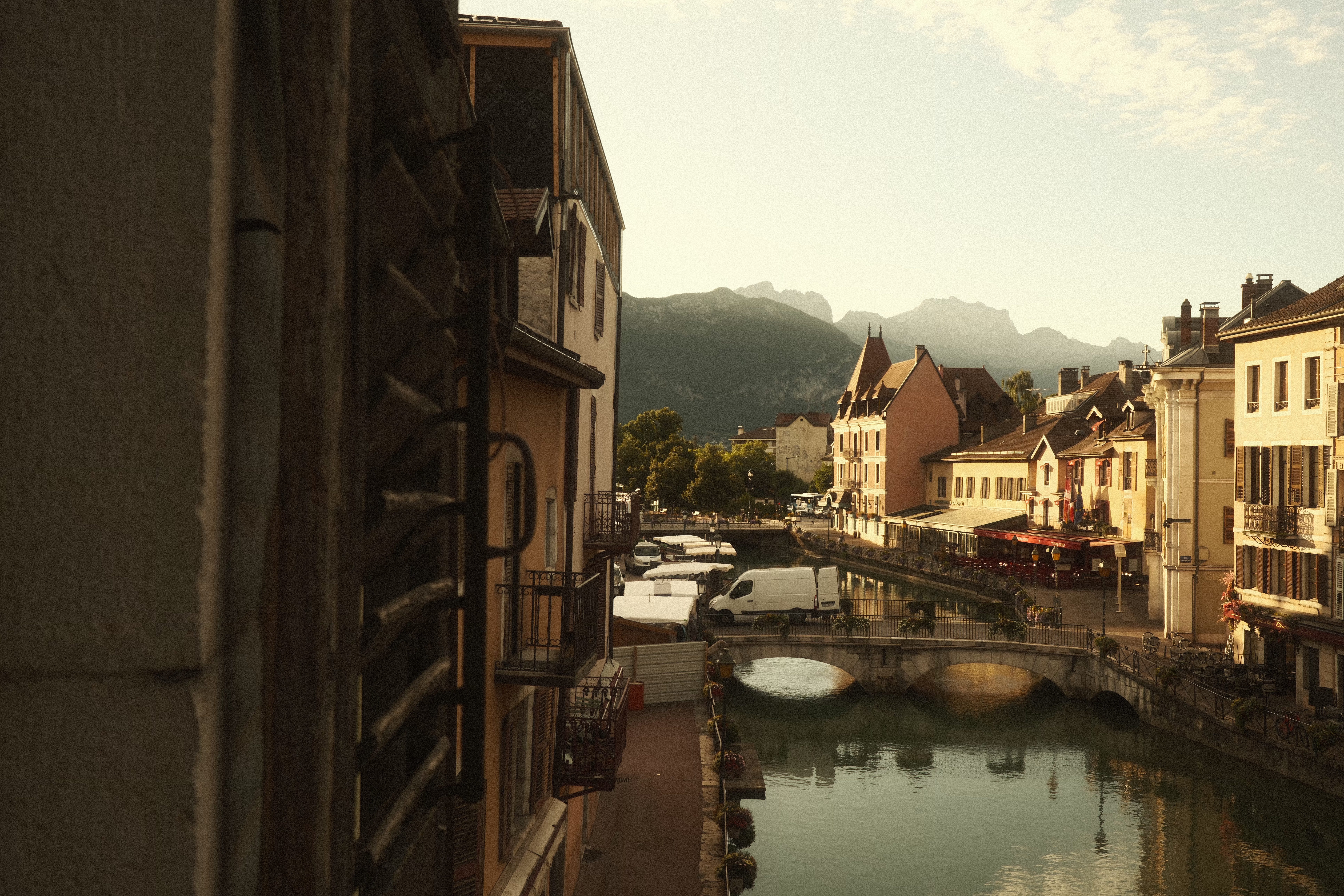
A painted wooden shutter with centuries of patina. A patterned lintel carved into local limestone. Ironwork twisted by hand into shapes that seem too delicate to have weathered so many storms. Even Monaco’s old quarter, beneath all its modern glamour, carries the imprint of a time when stone masons and plaster workers left their identity on every wall.
These exteriors were decorative at times, but they were always anchored to honest structure. The artistry existed to enrich a building that was already built to endure. A sculpted niche or a plaster flourish never pretended to hold a roof. It simply added meaning to a wall that did.
This is why wandering through these places feels so immediate and human. You are surrounded by the accumulated skill of generations. Every detail is real. Every detail has intent. And every detail rests on a foundation of authenticity.
The Industrial Shift: When Facades Became Masks
Everything changed with the spread of light timber framing in the nineteenth and twentieth centuries. The ability to build quickly, cheaply, and repetitively created a new opportunity: you could construct the same basic structure anywhere and then dress it up to look like anything.
This was the birth of the modern facade in its current sense. Brick that is not brick. Stone that is not stone. Shutters that never close. Trim that covers gaps. Siding meant only to evoke an idea of something older and sturdier.
The goal was no longer to celebrate craftsmanship. It was to simulate it.

Developers learned that they could produce the appearance of permanence without the cost or time associated with real materials. And consumers, conditioned by decades of marketing, learned to see these superficial gestures as signs of quality. A thin layer of brick became shorthand for durability, even though it contributed nothing to the home’s structure. Stone veneer became shorthand for luxury. Fiber cement that mimicked wood grain became shorthand for warmth or tradition.
We stopped asking whether these things were real. We simply accepted that a house could wear a costume and that this was normal.
A Cultural Turning Point: From Aesthetic to Authentic
We are now living in a moment where consumers are rethinking what matters to them. For decades, American housing has been shaped by the assumption that aesthetics alone are enough, that the surface is what sells. But as more people gravitate toward authenticity in food, products, clothing, and brands, they are beginning to want the same from their homes.
This shift is not superficial. It is generational. The rise of craft coffee, natural materials in fashion, farm to table food, and interest in provenance all speak to a cultural mood. People want to know what things are made of. They want to know how they work. They want fewer ingredients. They want transparency. They want quality that is inherent, not implied.
Housing has been slow to respond, but the pressure is building. The more consumers learn about how homes are actually put together, the less satisfied they become with decorative layers that hide average assemblies or mediocre craft.
Authenticity has become a value in its own right. It is no longer about style. It is about integrity.
Why This Matters for the Future of Housing
The most interesting thing about this cultural shift is that it brings us back to where facades began. Not to medieval ornamentation necessarily, but to the idea that a building’s expression should be rooted in the truth of how it stands.
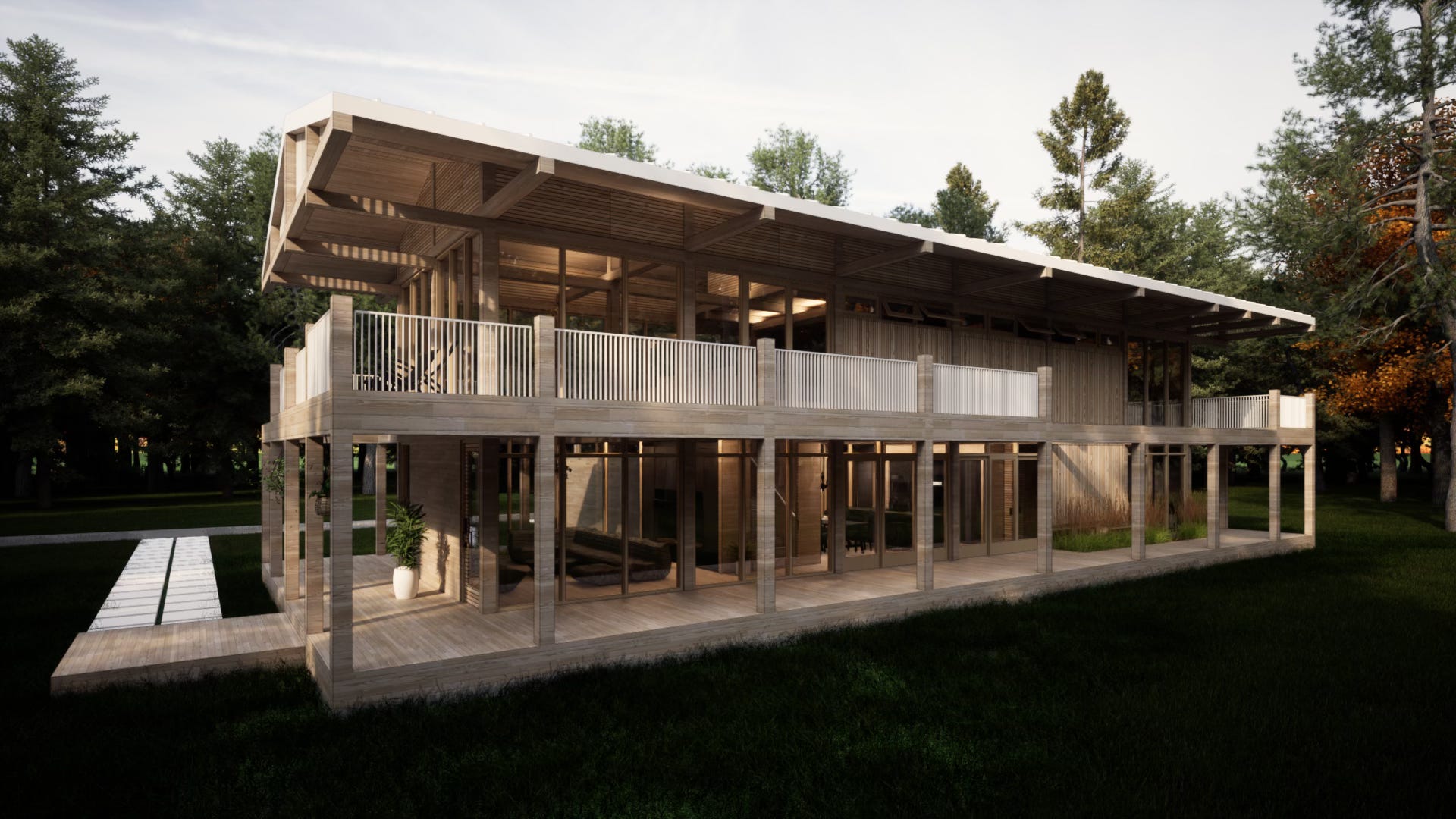
Mass timber, panelized systems, and modern craftsmanship are aligned with this desire. A CLT wall does not need makeup. It does not need to pretend. The grain, the texture, the warmth, and the joinery speak for themselves. A precisely built enclosure has its own beauty. It does not rely on veneers to signal quality because the quality is already present.
When a structure is beautiful, the facade becomes unnecessary. And that brings us closer to the architectural honesty that defined so much of Europe’s most beloved places.
The Return to Material Honesty
It is possible that the future of housing will look more ancient than modern. Not in its aesthetics, but in its values. Materials will once again do the job they are meant to do. Exteriors will once again express the structure they contain. And craftsmanship will once again be visible, not concealed.
The idea of the facade will continue, but not as a mask to hide inferior assemblies. It will become an extension of the building’s integrity, not a disguise for its weaknesses.
Authenticity is quietly reshaping what people look for in a home. And as that preference grows, the industry will have to respond. Homes designed around real materials, honest structure, and visible craft will not just feel better. They will earn trust.