Housing's Missing Engine
What homes could learn from the way cars are designed, tested, and refined before a single buyer ever steps inside.

When you buy a car, you’re not buying an experiment. You’re buying the product of decades of refinement; millions of data points, shared engineering platforms, and rigorous testing that happens long before the first customer steps inside.
Now imagine if every car on the road were built from scratch by a different mechanic, one custom order at a time, with parts sourced from a dozen suppliers who’d never met. That’s housing.
From Carriages to Cars — and Why Housing Got Stuck
At the dawn of the automobile age, cars weren’t so different from homes. They were hand-built by craftsmen — often by the same people who made horse-drawn carriages. Each was a unique creation, assembled piece by piece for a wealthy client. There was no standardization, no shared supply chain, and no real scalability.
Then came the platform revolution. In 1908, Ford introduced the Model T, not just as a car but as a product — something designed to be built, repaired, and improved systematically. The assembly line followed in 1913, and within a few decades, the auto industry had evolved from artistry to engineering.

Housing never made that leap. We still build homes like early carriage makers built cars — one at a time, in the open air, with enormous variability and almost no feedback loop.
1. Shared Platforms: The Hidden Foundation
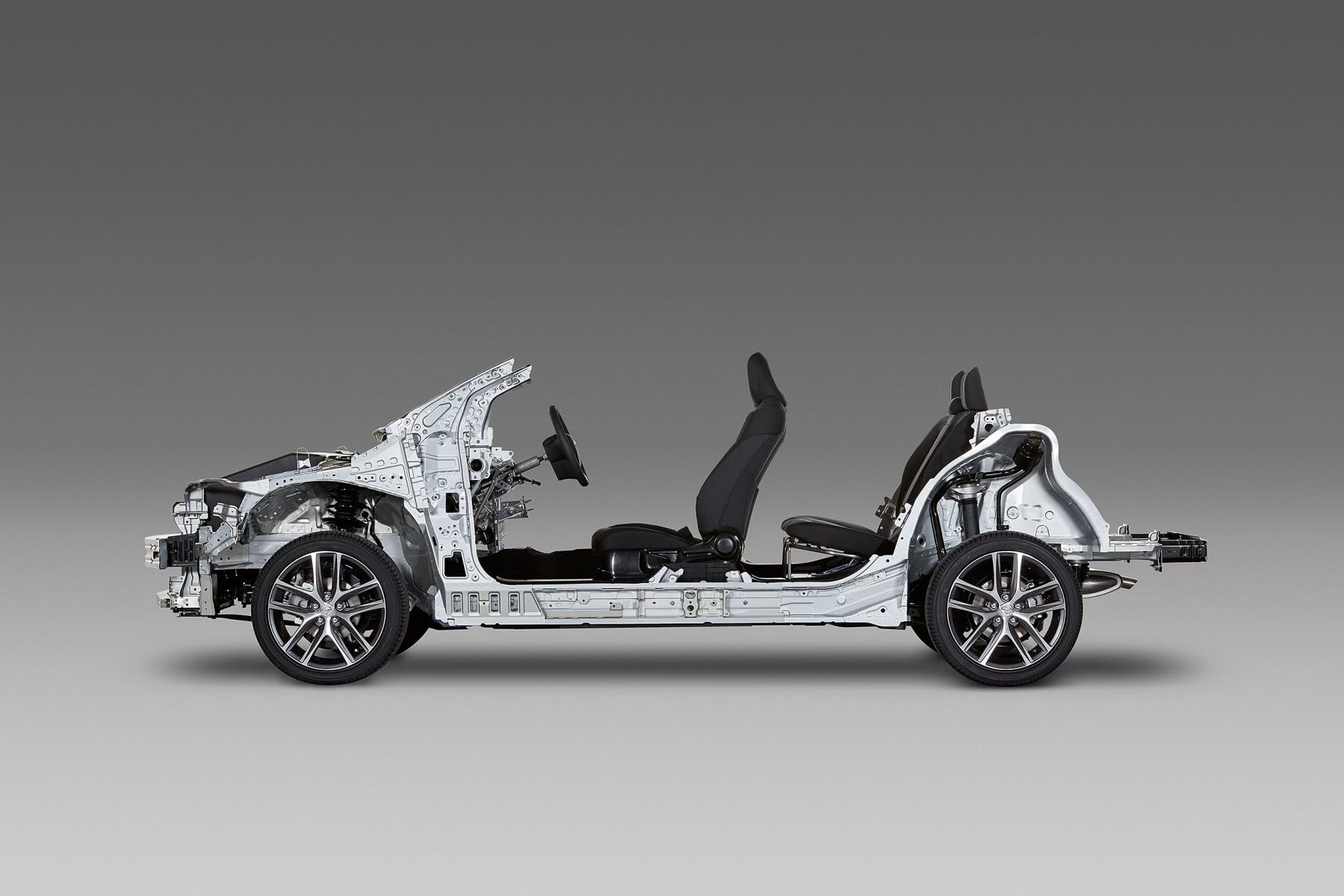
Walk through an auto plant today and you’ll see a remarkable thing: cars that look completely different; sedans, SUVs, even crossovers — all riding on the same chassis. Automakers call it a shared platform. Beneath the sheet metal lies a common set of components: frame, drivetrain, electrical architecture, and safety systems.
Take Toyota’s TNGA (Toyota New Global Architecture). Introduced in 2015, it underpins vehicles as varied as the Camry, RAV4, and Prius. By consolidating dozens of unique platforms into just a handful, Toyota reduced production costs by roughly 20%, lowered development time, and achieved a 50% improvement in structural rigidity across its fleet. That rigidity translated into better ride comfort, higher safety ratings, and longer vehicle lifespans — benefits that trickle down to every driver, not just premium buyers.
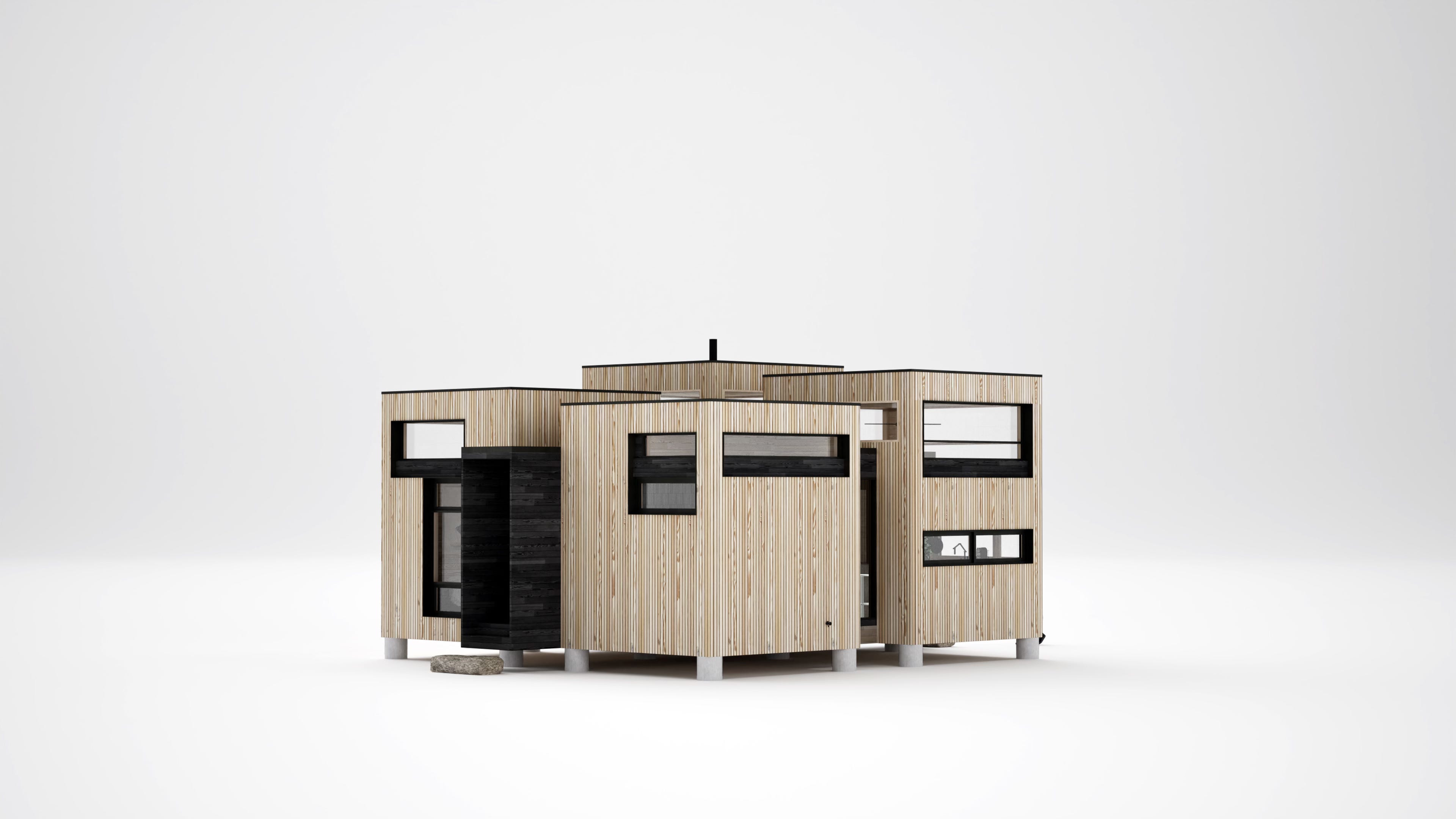
Housing could learn from that. Imagine if homes shared a structural “chassis”: a standardized mass-timber core, a consistent MEP (mechanical-electrical-plumbing) spine, and a digital layer for control and monitoring. Different façades, layouts, and finishes could still create individuality — but underneath, every home would run on the same proven foundation.
That’s how industries evolve from craftsmanship to reliability. Once the platform is stable, creativity can flourish on top. And this is how you evolve without losing the soul, that unique feeling of a well designed space.
2. Innovation and R&D: The Missing Department
Every automaker has a research division consisting of teams dedicated to making small improvements that compound over time. Toyota alone spends $1 Million per hour on R&D. They test, measure, iterate, and feed those lessons back into design.
In housing, “innovation” usually means a new floor plan or a different siding color. There’s almost no R&D infrastructure, no systemic testing, and no shared database of performance data. Every home is a prototype, and every homeowner becomes the beta tester.
If we treated each build as data, collecting information about material performance, energy use, and occupant satisfaction, we could iterate like automakers do. Homes could evolve generation by generation, not decade by decade.
That’s what we’re exploring at Holden Co. using precision manufacturing and digital tools to turn lessons from one project into improvements for the next. Fewer one-off decisions. More repeatable excellence.
3. Quality Assurance: The Pre-Delivery Test We Never Run
Before a car leaves the factory, it goes through a battery of tests: emissions, crashworthiness, durability, even road noise. No vehicle reaches a customer without passing strict quality gates.
In housing, the “quality test” is the homeowner’s move-in day. A missed flashing detail or mis-aligned seal might not show up for years. And when it does, the builder is long gone.
A productized housing model changes that. Factory-built components can be precision-cut to millimeter accuracy, systems can be pressure-tested, and tolerances verified before shipment. Think of it as a housing QA checklist instead of a builder’s punch list.
The result isn’t just fewer warranty claims, it’s trust. Customers know what they’re getting. Builders know what they’re delivering.
4. What Happens When We Get It Right
Applying these lessons could reshape the economics and experience of housing:
Consistency: Shared platforms reduce variability, leading to predictable quality and cost.
Innovation: R&D feedback loops accelerate progress in materials, sustainability, and livability.
Reliability: QA ensures every home performs as intended, from day one.
Affordability: Scaled production spreads costs, just as it did for automobiles a century ago.
Most importantly, it builds trust, the same kind of confidence that makes someone buy a Toyota sight-unseen because they know exactly what they’ll get.
5. Finding the Engine
We can describe a company’s core as its “engine.” Housing has never built one. Instead, it relies on thousands of disconnected trades and processes, each reinventing the wheel for every project.
But imagine if we built that engine; a repeatable, evolving system that powers better homes at every price point. The future of housing won’t be found in more contractors or more customization. It’ll be found in shared systems, tested processes, and thoughtful design, the same ingredients that turned the automobile from a luxury to a lifestyle.
That’s the journey we’re on at Holden Co.: to find housing’s missing engine and finally bring this industry into the age of products.